![Scientific results of the Elder Exploring Expedition. II. [AND] III (last).](https://www.schierenberg.nl/media/cache/product_main/77756/77756_x.jpg)
Tate, R. (ed.)
Scientific results of the Elder Exploring Expedition. II. [AND] III (last).
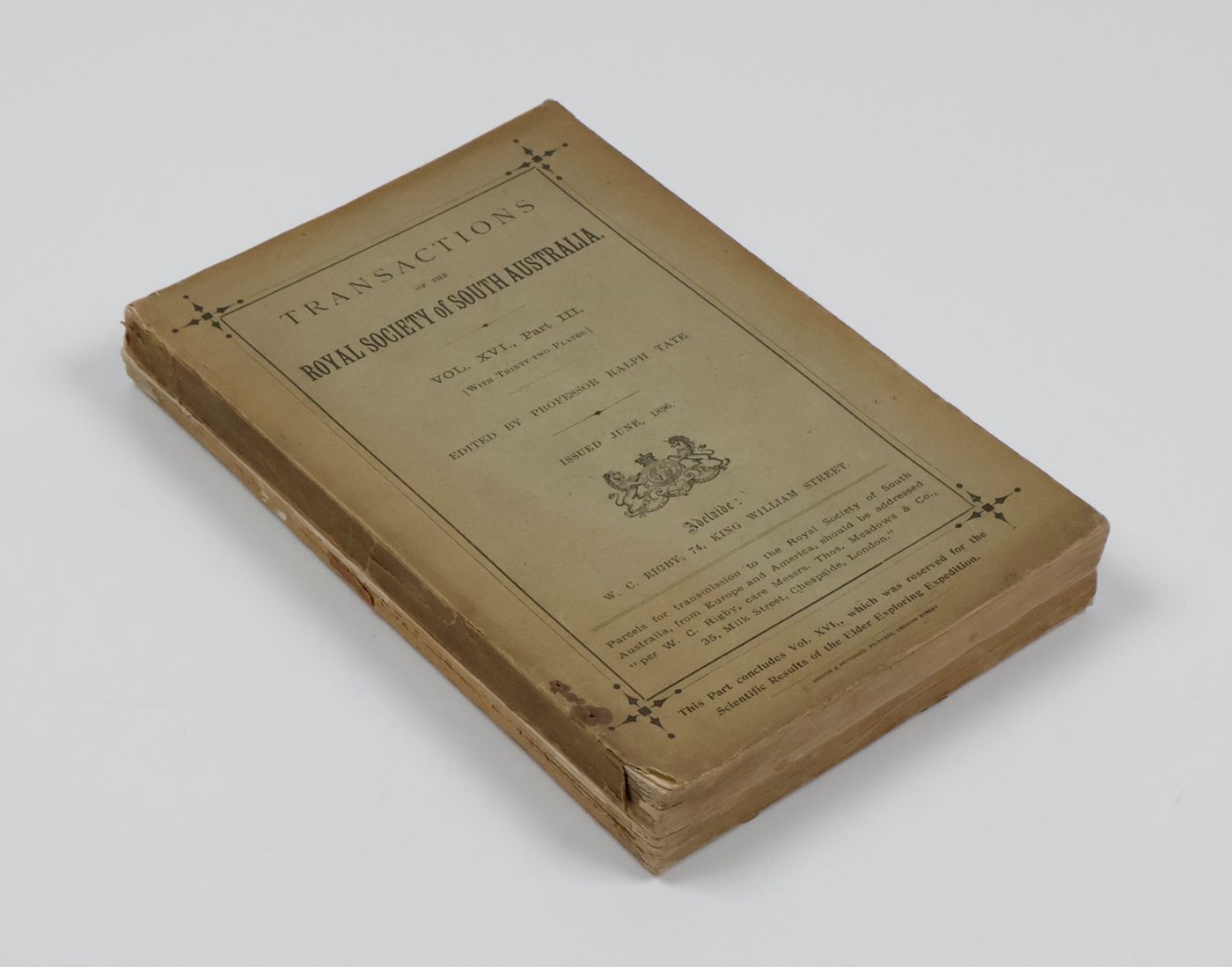
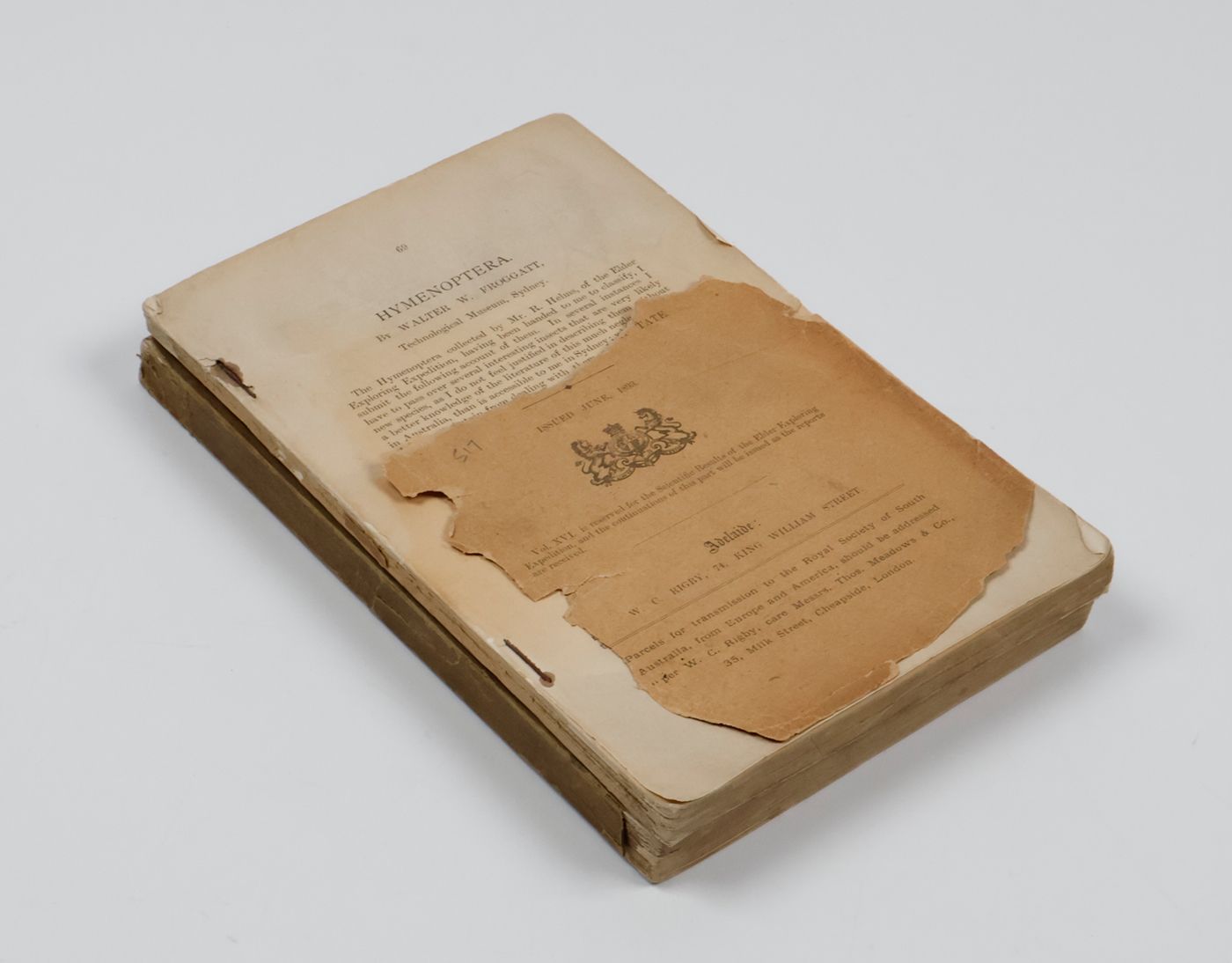
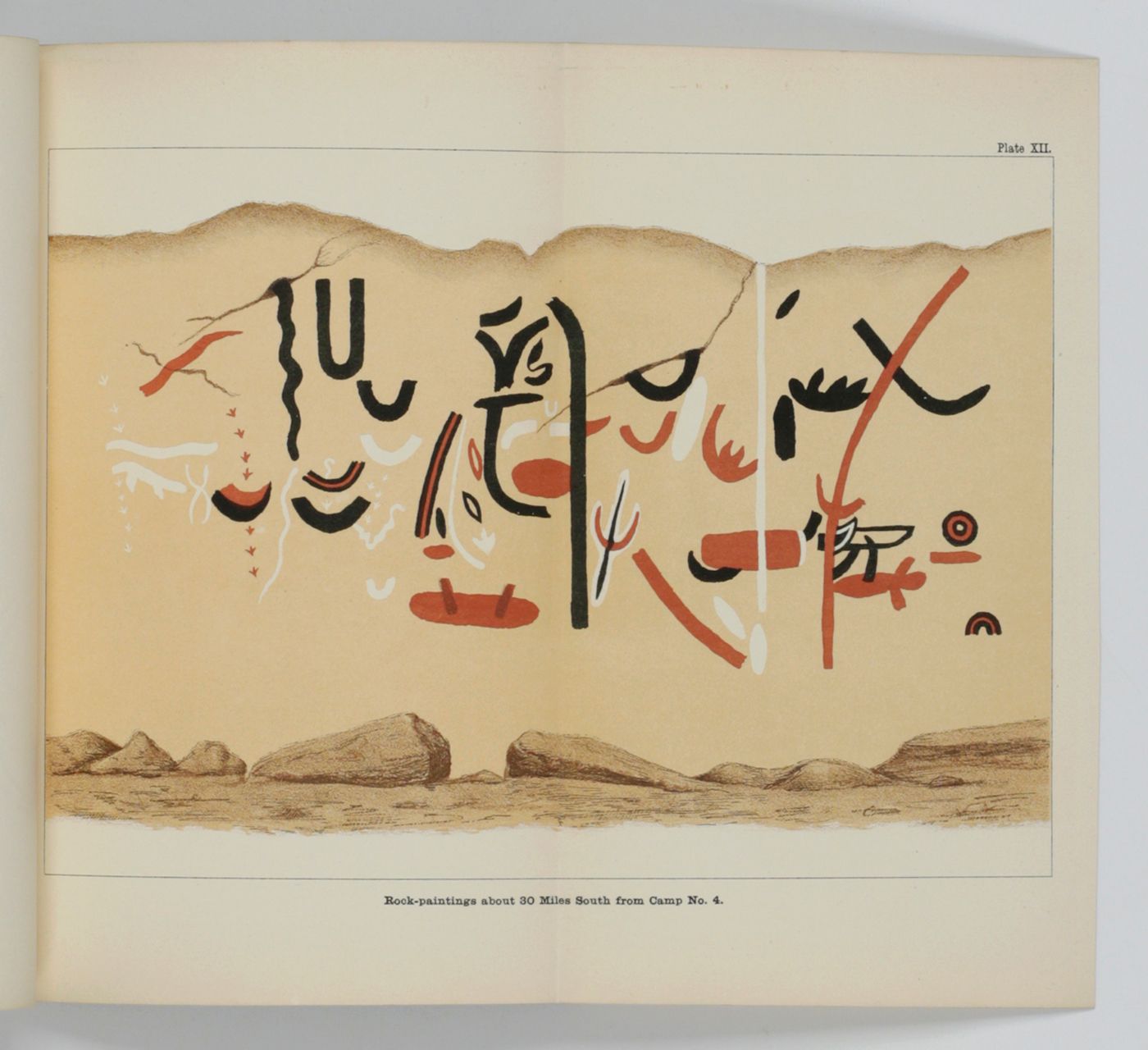
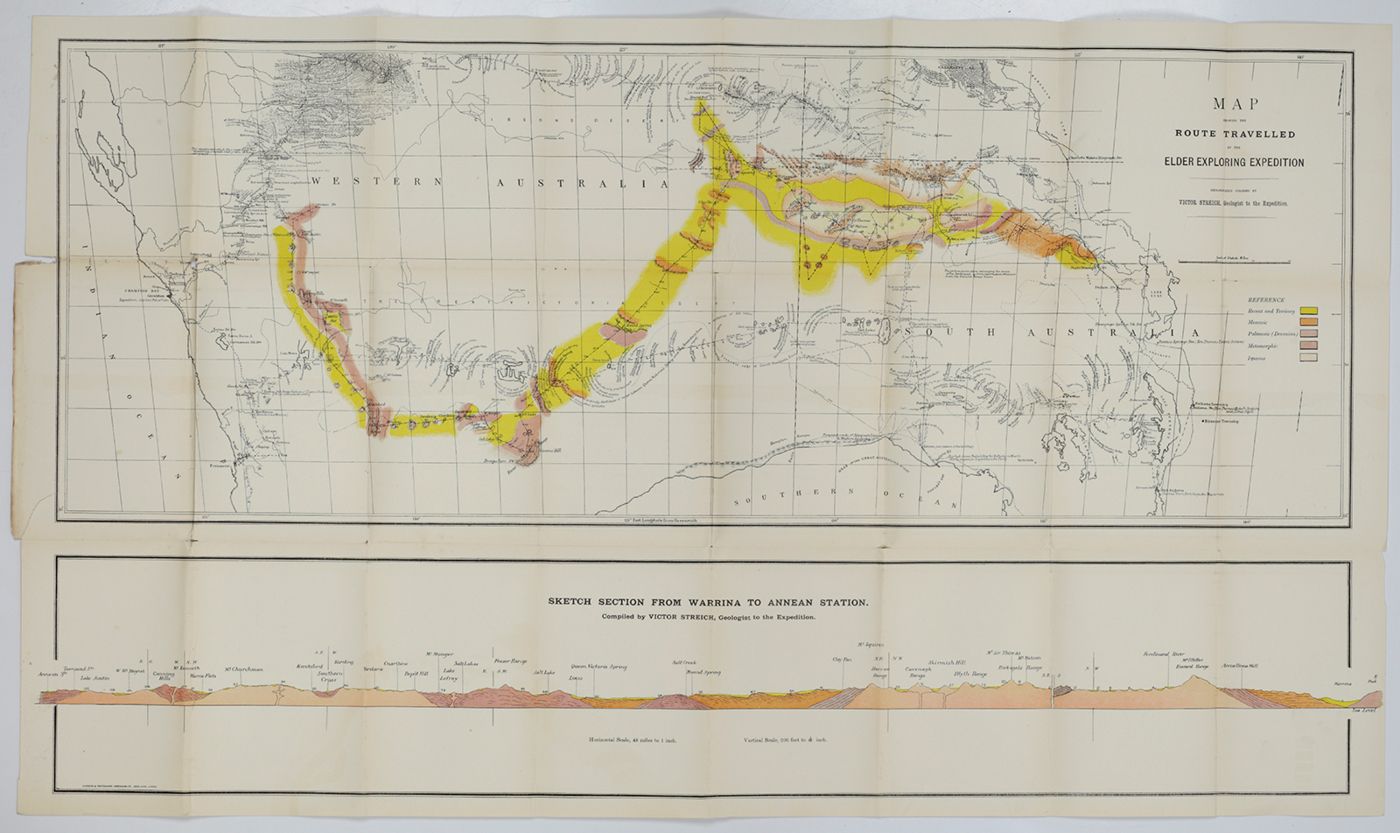
Adelaide, W. C. Rigby (for the Royal Society of South Australia), 1893-1896. Two volumes (of three) in two. 8vo (21.3 x 14.0 cm). 317 pp. [numbered 69-386]; 38 plates (numbered II-XXXIX), of which seven in chromolithography, and three larger, folded. Very large, partly coloured folded map (106.0 x 60.5 cm). Original uniform printed wrappers.
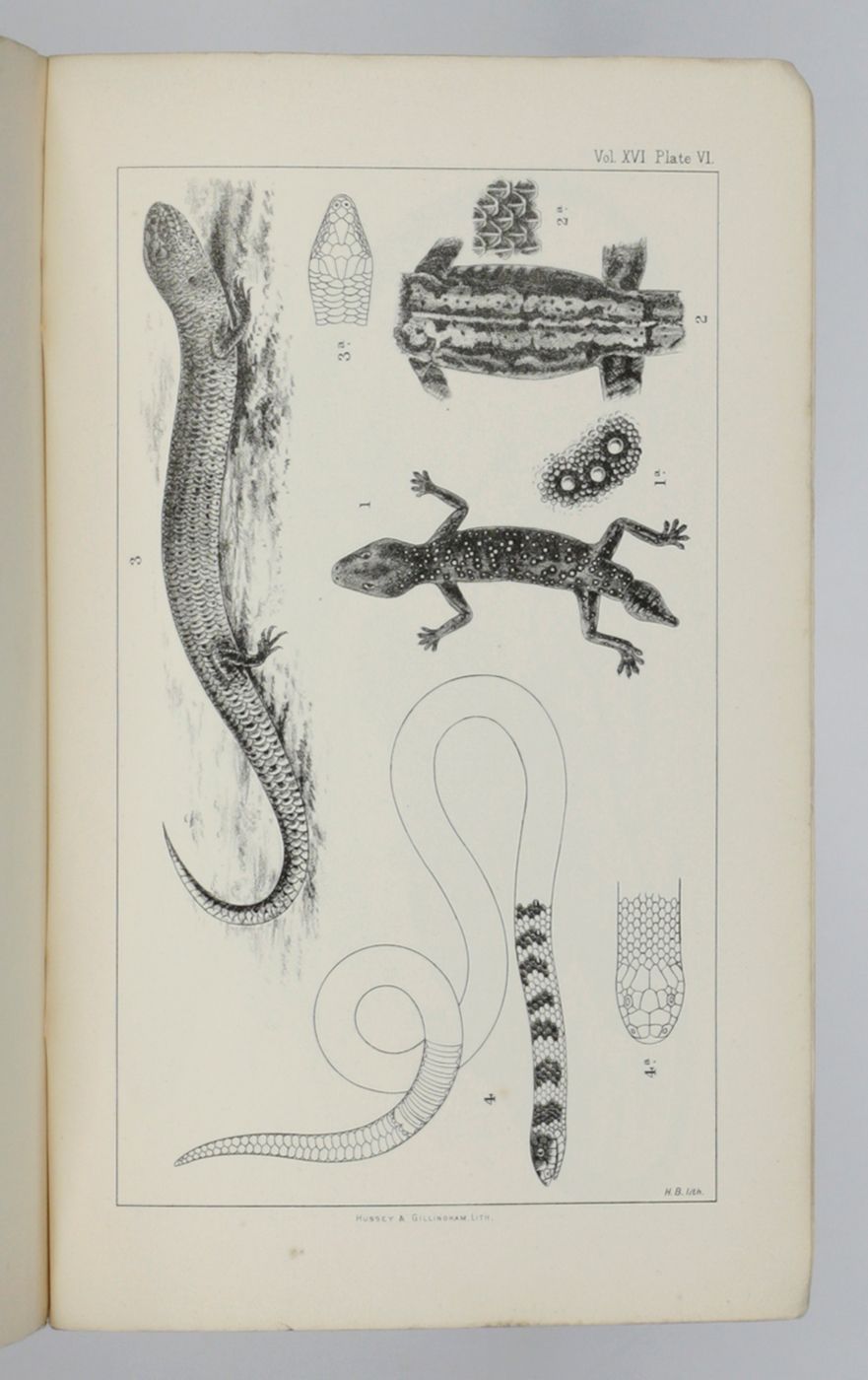
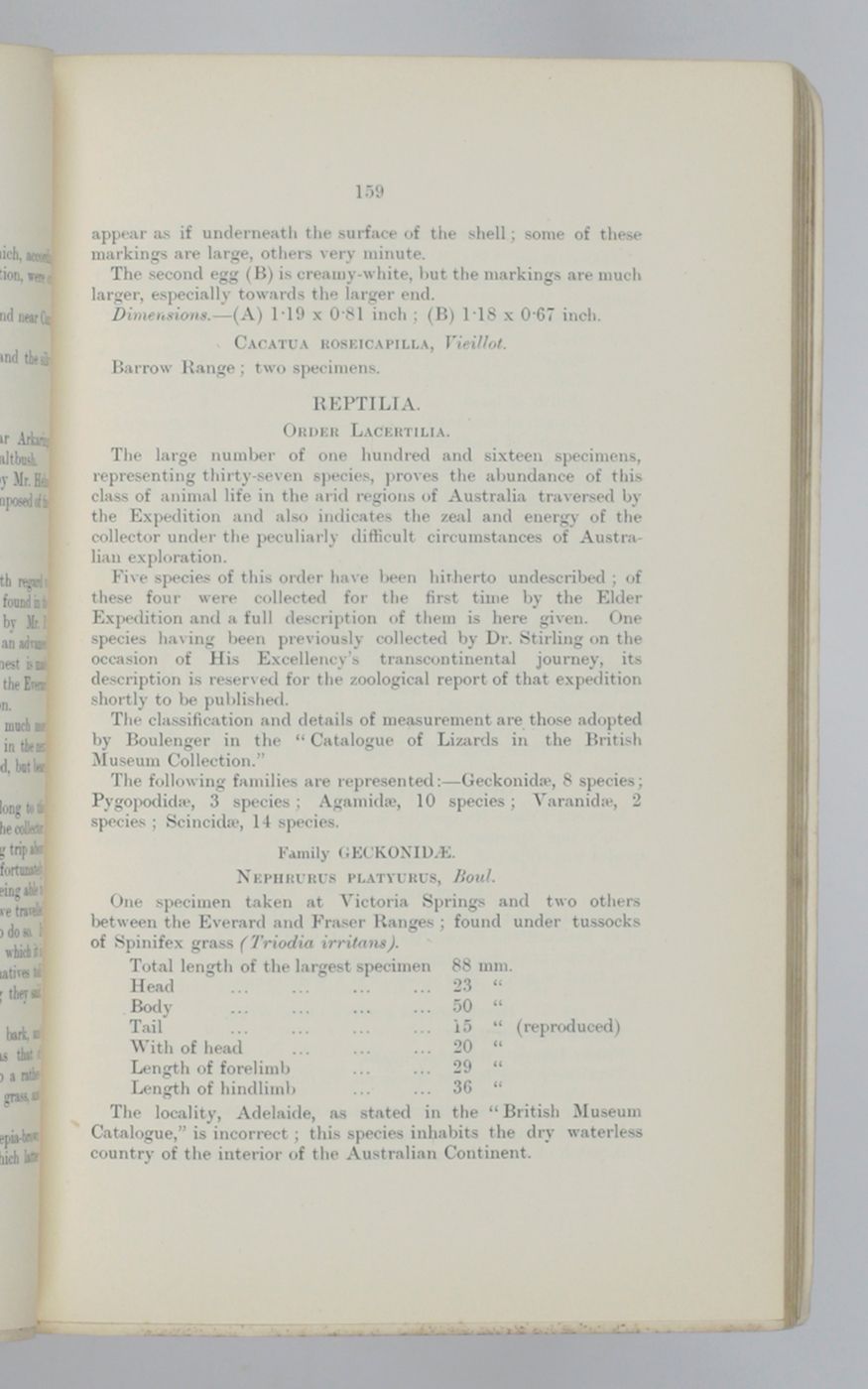
These are the results of an expedition through the interior of Australia, initiated by the Australian explorer and philanthropist Sir Thomas Elder (1818-1897), and edited by the British-born Australian geologist, botanist and malacologist Ralph Tate (1840-1901). The map of the itinerary is quite impressive in size and detail. A narrative was published separately. These are two out of three parts of the Scientific Results, published as Volume XVI of the Transactions of the Royal Society of South Australia. These two volumes deal with the anthropology, geology, meteorology, topography, lichens, fungi, grasses, phanerogams and vascular cryptogams, Hymenoptera, Coleoptera (Part II, and Broscides), Orthoptera, and Vertebrata, including herpetology, by the Australian explorer Edward Charles Stirling (1848-1919) and the German-Australian zoologist Amandus Heinrich Christian Zietz (1840-1921). Of the botany and zoology, only the herpetology is illustrated, with two plates showing new and poorly known reptiles. Not present is the smaller first part (pp. 1-68, one plate), which appeared in 1892, and dealt with vegetation, Lepidoptera, Coleoptera (Part I, with one plate), and continental molluscs. Part III concludes with an index to all three parts. It was published after much delay, by a temporary lack of funding. The anthropology is by far the largest section, and the most profusely illustrated. The narrative, by the Australian botanist and zoologist Richard Helms (1842-1914), is detailed, and not unsympathetic, although marred by the usual "western" sense of superiority and arrogance. Helms noted that the tribal live observed were fast disappearing before an advancing civilisation as an inevitable consequence of - misinterpreting Darwin - "survival of the fittest". Front wrappers of the second part largely lost; rear wrapper and map detached; the third part very good, only a bit abraded at spine ends; large map with short tears at a few fold corners; otherwise very good, clean, unmarked. Ferguson (9409-9409a) reports the narrative of the expedition, but not these scientific parts, nor, indeed, the Royal Society of South Australia and its publications. Adler III, pp. 164-166 (for Stirling and Zietz).

![image for Scientific results of the Elder Exploring Expedition. II. [AND] III (last).](https://www.schierenberg.nl/media/cache/product_thumb/77756/77756_x.jpg)
![image for [Portrait by Jules Boilly].](https://www.schierenberg.nl/media/cache/product_thumb/77466/77466_x.jpg)