![The white throated toucan ( <em>Ramphastos tucanus</em>). From: <em>Histoire naturelle des oiseaux de paradis et des rolliers, suivie de celle des Toucans et des Barbus</em> [Plate 4. Le Cocan à collier jaune].](https://www.schierenberg.nl/media/cache/product_main/79070/79070_x.jpg)
Barraband, J. [in F. Levaillant]
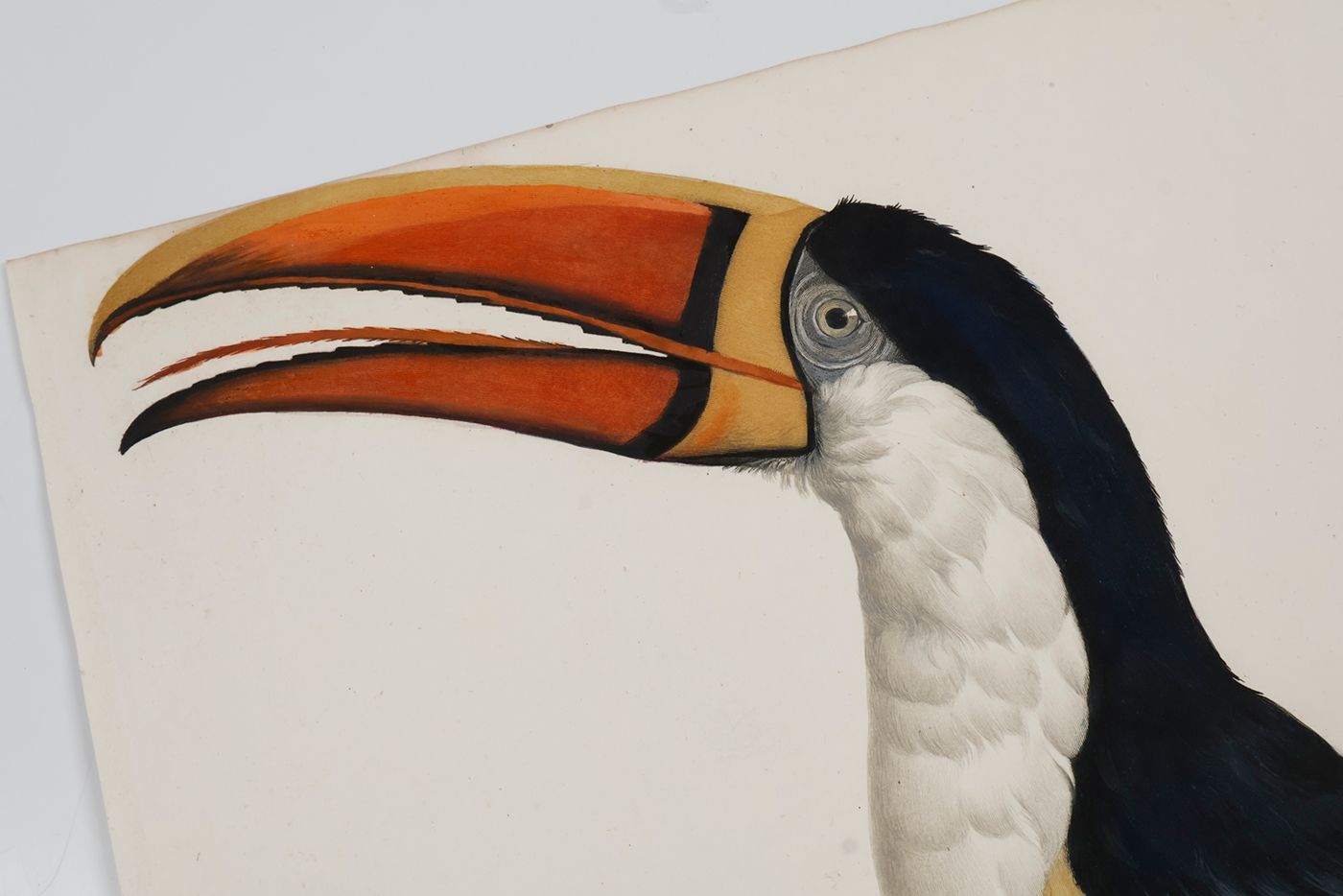
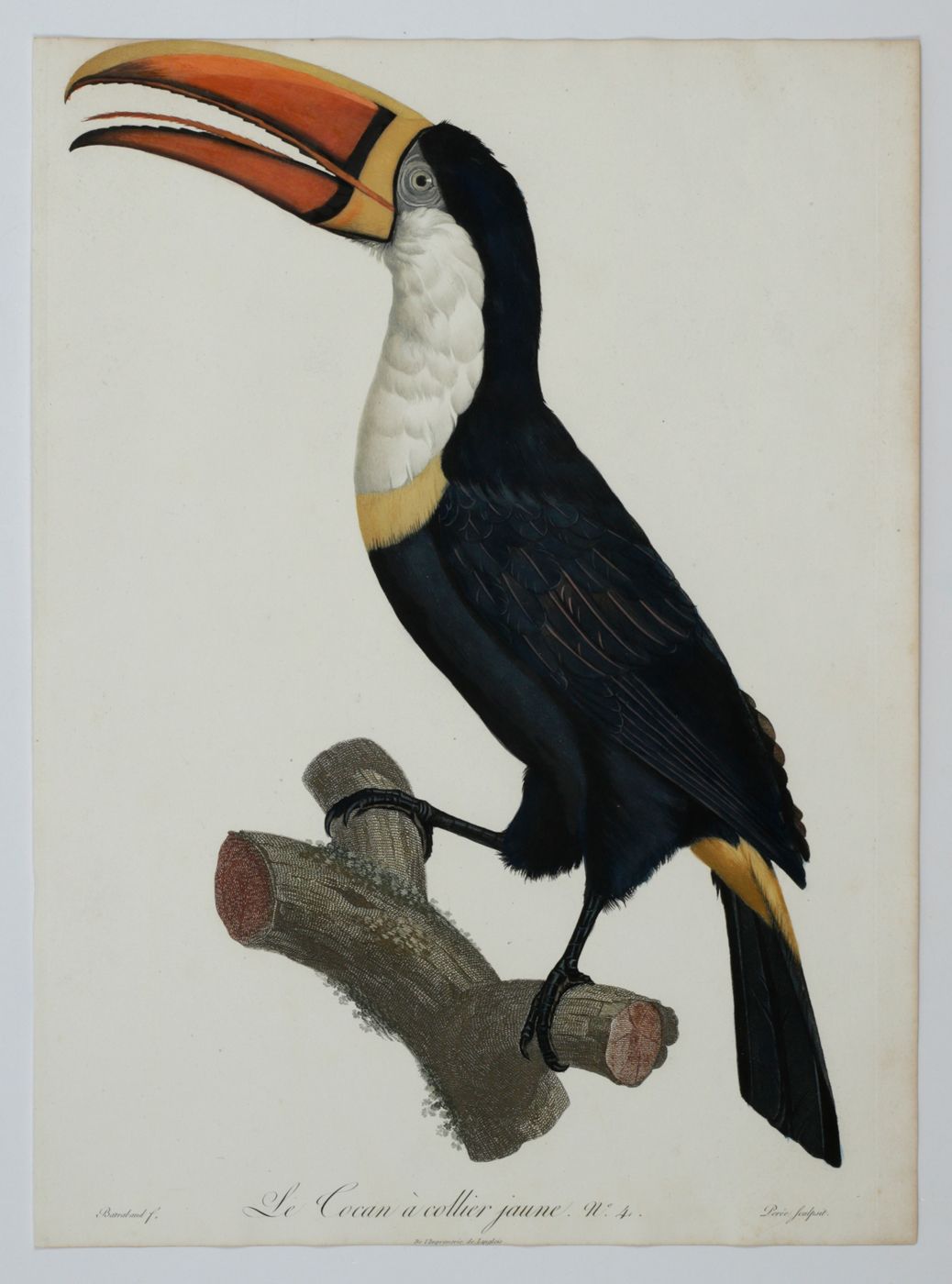
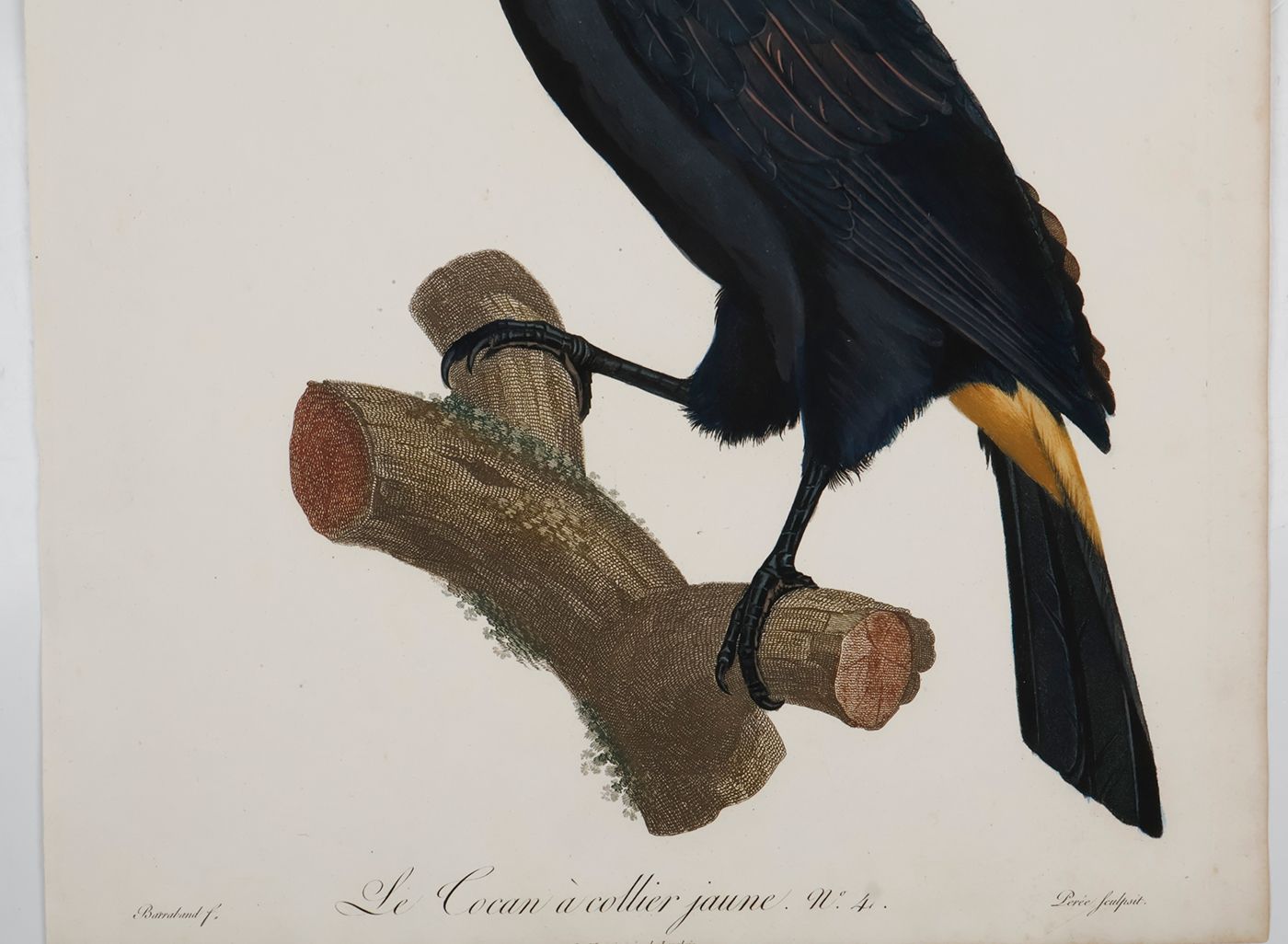
The white throated toucan ( Ramphastos tucanus). From: Histoire naturelle des oiseaux de paradis et des rolliers, suivie de celle des Toucans et des Barbus [Plate 4. Le Cocan à collier jaune].
Paris, Denné le jeune, Perlet, [1801-] 1806. Single sheet. Very large folio (50.8 x 37.9 cm). Colour-printed by Langlois and Rousset, finished by hand.
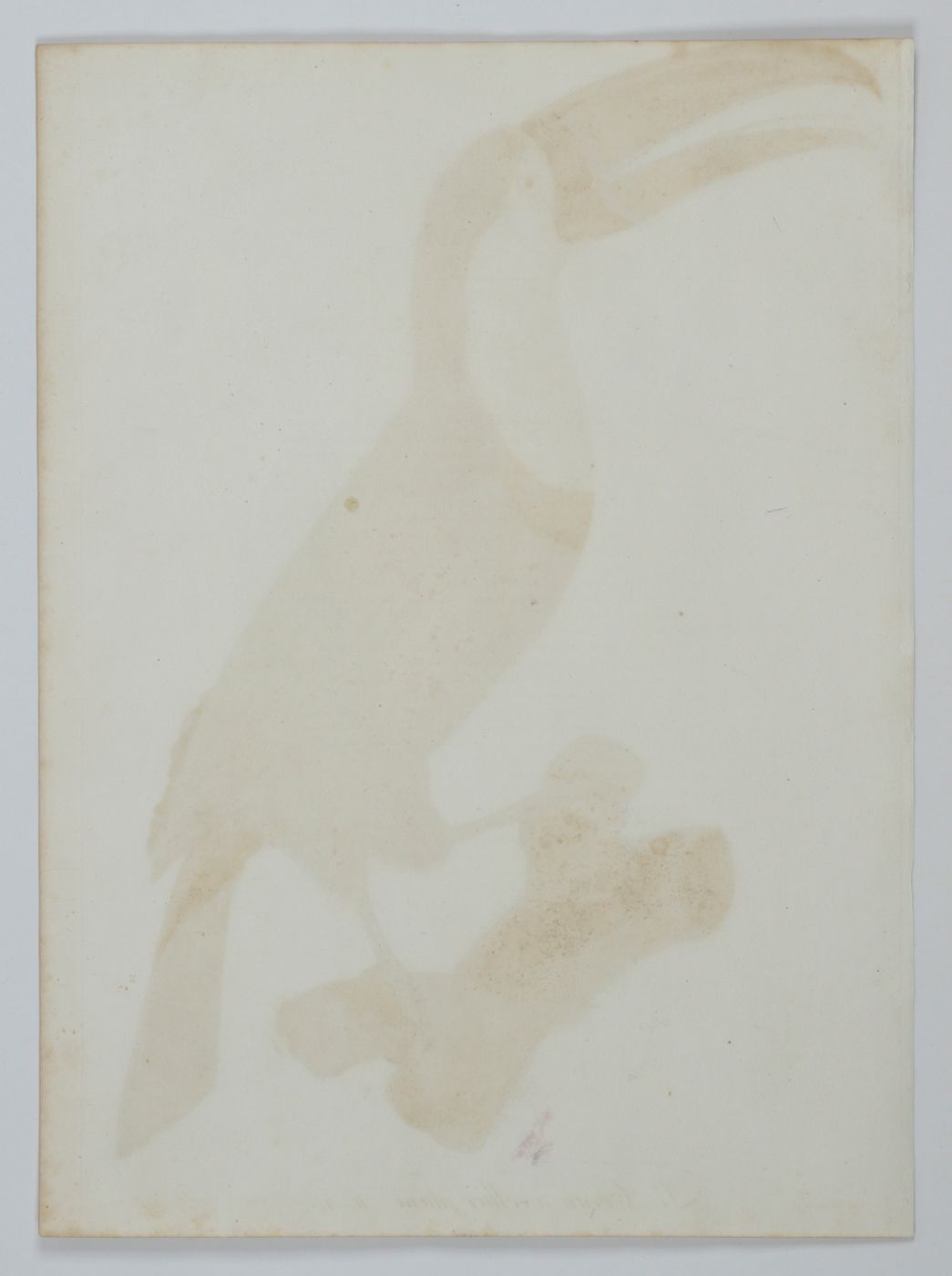
A fine, copper-engraved plate, in very good condition, of one of the world's most spectacular birds, the red-billed or white throated Toucan ( Ramphastos tucanus). This original plate is the work of one of the period’s foremost bird illustrators, the French artist Jacques Barraband (1767-1809). Barraband's works are esteemed especially for their realism. Although his illustrations were based on mounted specimens, they were considered the most accurate made during the early 1800s. His birds are never stiff, nor are they artistic rather than accurate, as in, for example, the work of Audubon. The white throated Toucan from neotropical rain-forests occurs mainly in Brazil, and the amazonian parts of Colombia, Peru, Ecuador, and Bolivia, and in the Guyanas. Sometimes, three subspecies are recognized, this then being the red-billed toucan, principally known from Venezuela, Guyana, Suriname, French Guiana, and northern Brazil. Originally published in a work by the French explorer and ornithologist François Levaillant (1753-1824), Histoire Naturelle des Oiseaux de Paradis et des Rolliers, suivie de Celle des Toucans et des Barbus. Levaillant's book is known to be prone to foxing, but this plate forms a rare exception, with only some minor, marginal spotting, otherwise, excellent, clean, the colouring lively and bright. Anker, 304; Nissen IVB, 559; Ronsil, p. 298; Sitwell, p. 118; Zimmer, p. 393.

![image for The white throated toucan ( <em>Ramphastos tucanus</em>). From: <em>Histoire naturelle des oiseaux de paradis et des rolliers, suivie de celle des Toucans et des Barbus</em> [Plate 4. Le Cocan à collier jaune].](https://www.schierenberg.nl/media/cache/product_thumb/79070/79070_x.jpg)